
Saffron for Depression: What Science Says
For centuries, saffron has been celebrated as the world’s most precious spice—a golden thread woven through the culinary and medicinal traditions of cultures spanning from ancient Persia to modern-day kitchens worldwide. But in recent years, this vibrant stigma of the Crocus sativus flower has captured the attention of researchers for an entirely different reason: its remarkable potential as a natural aid for depression and mood disorders.
New to saffron? Start with our overview of saffron benefits.
Multiple clinical trials and meta-analyses have examined saffron’s antidepressant properties, and the results have been compelling enough to rival some conventional treatments. If you’ve been curious about whether this ancient spice could play a role in modern mental health support, this guide breaks down everything the science says about saffron for depression—including dosage, effectiveness, timing, and safety.
How Saffron Affects Mood and Depression
Depression is a complex condition involving imbalances in neurotransmitters—particularly serotonin, dopamine, and norepinephrine. Conventional antidepressants typically work by targeting one or more of these pathways. Saffron, as it turns out, appears to influence several of the same neurochemical systems, but through a unique multi-target mechanism that sets it apart from single-action pharmaceuticals.
The Serotonin Connection
One of the most well-documented ways saffron supports mood is through its effect on serotonin. Serotonin is often called the “feel-good” neurotransmitter because of its central role in regulating mood, sleep, appetite, and emotional well-being. Research suggests that saffron’s active compounds help modulate serotonin levels by inhibiting its reuptake—meaning more serotonin remains available in the synaptic space between neurons, similar to how selective serotonin reuptake inhibitors (SSRIs) work, though through a gentler mechanism.
Unlike pharmaceutical SSRIs, which forcefully block serotonin transporters, saffron appears to modulate serotonin activity more subtly. This may explain why studies comparing saffron to fluoxetine (Prozac) have found similar antidepressant effects with potentially fewer side effects in some patients. Additionally, saffron has been shown to influence dopamine and norepinephrine systems, providing a broader neurochemical impact than many single-mechanism antidepressants.
Crocin and Safranal: The Active Compounds
Saffron contains more than 150 bioactive compounds, but two stand out as the primary drivers of its mood-enhancing effects:
Crocin is the carotenoid pigment responsible for saffron’s distinctive deep red color. Beyond its visual appeal, crocin has demonstrated significant antioxidant and anti-inflammatory properties. In the brain, oxidative stress and neuroinflammation are increasingly recognized as contributing factors to depression. By scavenging free radicals and reducing inflammatory markers, crocin helps protect neurons from damage and supports healthy brain function. Studies have shown that crocin can reduce markers of oxidative stress in brain tissue and may promote the expression of brain-derived neurotrophic factor (BDNF), a protein essential for neuron growth and resilience.
Safranal is the volatile oil that gives saffron its characteristic aroma. It’s the compound most responsible for saffron’s anxiolytic (anti-anxiety) and antidepressant effects. Research indicates that safranal interacts with the GABA system—the brain’s primary inhibitory neurotransmitter—producing a calming effect that can help reduce the anxiety that frequently accompanies depression. Safranal has also been shown to modulate dopamine and serotonin receptors, further contributing to saffron’s mood-regulating profile.
Together, these compounds create a synergistic effect that addresses depression from multiple angles: neurotransmitter modulation, neuroprotection, inflammation reduction, and anxiety relief. This multi-target approach is one reason researchers find saffron so promising as a complementary or alternative approach to mood support.
What Clinical Studies Show
The scientific evidence supporting saffron’s antidepressant effects is robust and growing. Numerous double-blind, randomized controlled trials have compared saffron extracts to both placebo and conventional antidepressants, with consistently favorable results. A comprehensive review of these studies published in the Journal of Integrative Medicine examined the collective evidence and concluded that saffron supplementation produced antidepressant effects comparable to established pharmaceutical options.
In several head-to-head trials, saffron was compared directly with fluoxetine (Prozac), one of the most commonly prescribed SSRIs. In these studies, patients receiving 30 mg of saffron extract daily showed improvement in depression scores that were statistically equivalent to those receiving standard fluoxetine treatment. Remarkably, the saffron groups tended to report fewer side effects, particularly in categories like sexual dysfunction, sleep disturbances, and gastrointestinal issues—side effects that frequently lead patients to discontinue SSRI treatment.
A typical study design involved 40–60 adults diagnosed with mild to moderate depression, randomly assigned to receive either 30 mg of saffron extract or 20 mg of fluoxetine daily for six weeks. Depression severity was measured using standard scales like the Hamilton Depression Rating Scale (HAM-D). In multiple trials, both groups showed significant improvement from baseline, with no statistically significant difference between the two treatments.
Meta-analyses pooling data from multiple trials have strengthened these findings, showing that saffron consistently outperforms placebo and performs at least as well as fluoxetine. Some analyses have also noted that saffron may be particularly effective for mild to moderate depression, though more research is needed to determine its efficacy for severe depression.
Recommended Dosage for Depression
The standard dose used in most clinical trials for depression is 30 mg of saffron extract per day, typically divided into two 15 mg doses taken morning and evening. This dosage has been consistently effective across studies and is considered the therapeutic sweet spot for mood support.
Standard Dose: 30 mg/Day
The 30 mg daily dose is the most evidence-backed amount for depression. This is typically administered as a standardized extract rather than raw saffron threads, as extracts ensure consistent levels of active compounds. However, high-quality saffron threads can also be effective when properly prepared and consumed at equivalent amounts.
Therapeutic Range
While 30 mg is the standard, studies have explored doses ranging from 15 mg to 60 mg per day. The lower end (15–20 mg) may be sufficient for mild mood support, while doses at the higher end (up to 60 mg) have been used in some studies for moderate depression. It’s generally recommended to start at the lower end of the range and increase gradually if needed.
How to Measure Saffron Threads for Dosing
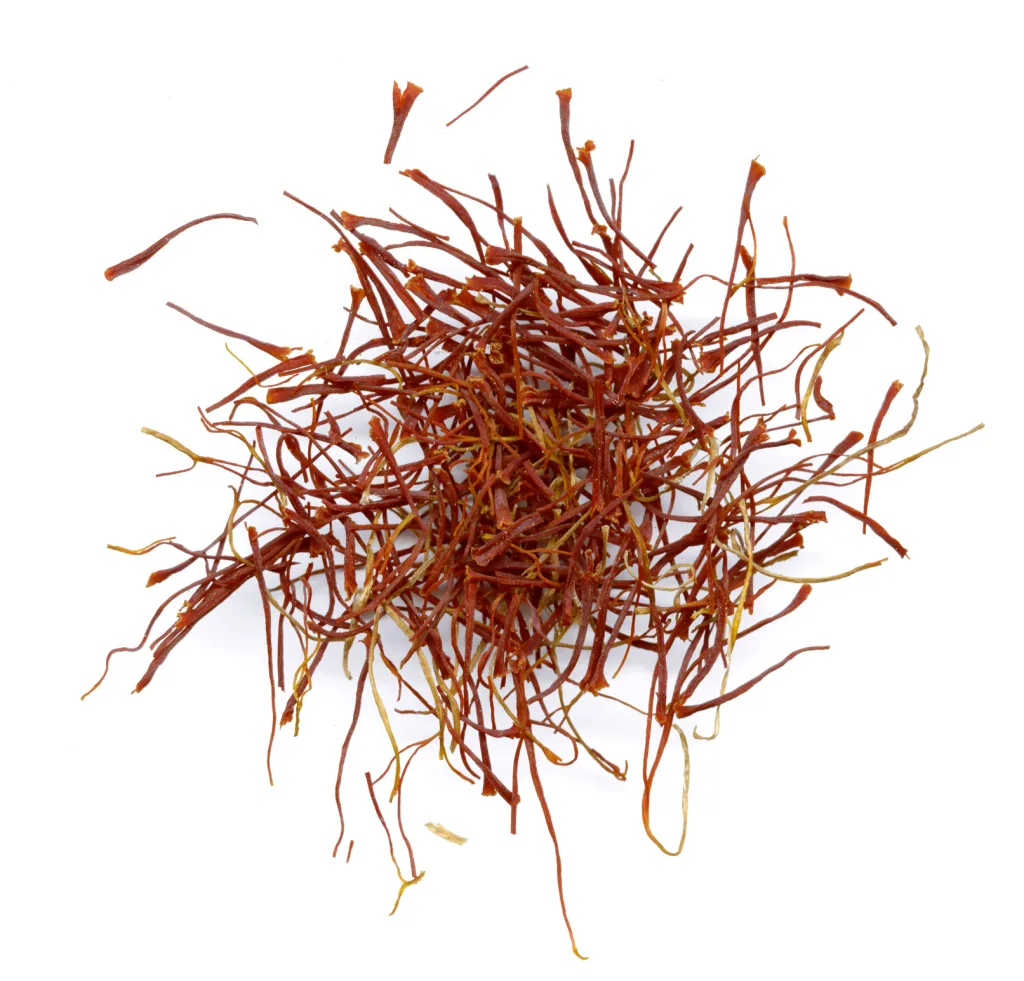
If you’re using whole saffron threads rather than a standardized extract, measuring the exact dose requires some attention. Approximately 10–12 high-quality saffron threads weigh about 10 mg. So to reach the standard 30 mg daily dose, you would need roughly 30–36 threads. A visual approximation is about a pinch of saffron threads—enough to lightly cover the surface of a quarter.
For the most accurate dosing, a milligram scale is recommended. Saffron is potent, and small measurement errors can mean taking significantly more or less than intended. If you don’t have a scale, thread count is the most reliable alternative measurement.
How Long Until You See Results?
Based on clinical trial data, most people begin to notice improvements in mood within the first two weeks of consistent saffron supplementation. However, the full therapeutic effect typically becomes apparent between four and six weeks of daily use.
This timeline is comparable to that of conventional antidepressants, which also require several weeks to achieve full efficacy. The gradual onset suggests that saffron works through adaptive changes in brain chemistry rather than providing immediate symptomatic relief.
In studies using the HAM-D scale, significant improvements were often observed at the two-week mark, with continued improvement through weeks four and six. Some participants reported subtle changes in mood and sleep quality even earlier—within the first several days—though these early effects may be partly due to saffron’s anxiolytic properties rather than its full antidepressant action.
If you don’t notice any improvement after six weeks of consistent use at the standard dose, it may be worth consulting a healthcare provider. Saffron, like any treatment, doesn’t work for everyone, and moderate to severe depression may require a different approach or combination of therapies.
Safety and Side Effects
At the therapeutic dose of 30 mg per day, saffron is generally well-tolerated. Clinical trials have reported side effects that are typically mild and transient. However, it’s important to understand the safety profile before starting supplementation.
Mild Side Effects
The most commonly reported side effects at therapeutic doses include:
- Dry mouth
- Mild headache
- Drowsiness or slight sedation
- Mild gastrointestinal discomfort
- Changes in appetite (either increased or decreased)
These side effects are typically mild and often resolve as the body adjusts to supplementation. They also tend to occur less frequently than the equivalent side effects reported with SSRIs.
When to Consult a Doctor
You should speak with a healthcare provider before using saffron for depression if you are currently taking any antidepressant medication, particularly SSRIs. Because saffron may also affect serotonin levels, combining it with SSRIs could theoretically increase the risk of serotonin syndrome—a rare but serious condition caused by excessive serotonin activity.
Additionally, consult a doctor if your depression is moderate to severe, if you experience suicidal thoughts, or if your symptoms are significantly impacting your daily functioning. Saffron may be a useful complementary approach, but it should not replace professional medical treatment for serious mental health conditions.
Who Should Avoid Saffron
Certain individuals should avoid therapeutic doses of saffron:
- Pregnant women — High doses of saffron may stimulate uterine contractions and potentially increase the risk of miscarriage
- People with bipolar disorder — Saffron’s mood-elevating effects could potentially trigger manic episodes
- Those taking SSRIs or other antidepressants — Due to the risk of serotonin syndrome
- People with low blood pressure — Saffron may lower blood pressure further
- Individuals scheduled for surgery — Stop saffron at least two weeks before any scheduled procedure
How to Use Saffron for Mood Support
Incorporating saffron into your daily routine doesn’t have to be complicated. Here are three simple and traditional methods:
Saffron Tea
Steep 10–15 saffron threads in hot (not boiling) water for 10–15 minutes. You can add honey or lemon for flavor. Drinking saffron tea in the evening can serve double duty—supporting mood while promoting relaxation before sleep.
Saffron Milk
Warm a cup of milk (dairy or plant-based) and add 10–15 saffron threads. Let it steep for 5–10 minutes. This traditional preparation is especially popular in Persian and Ayurvedic medicine for promoting calm and restful sleep. The fats in milk help extract the fat-soluble compounds like crocin, potentially enhancing absorption.
Saffron in Food
Adding saffron to rice dishes, soups, stews, and desserts is a delicious way to incorporate it into your diet. While the dose from culinary use is typically lower than therapeutic amounts, regular dietary inclusion may provide cumulative mood-supporting benefits. To maximize the extraction of active compounds, always bloom saffron in warm liquid before adding it to dishes.
Saffron vs Conventional Antidepressants
Understanding how saffron compares to conventional antidepressants can help you make an informed decision about whether it’s right for your situation. Here’s a comparison of key factors:
| Factor | Saffron | SSRIs (e.g., Fluoxetine) |
|---|---|---|
| Efficacy (mild–moderate depression) | Comparable in trials | Established efficacy |
| Onset of action | 2–6 weeks | 2–6 weeks |
| Common side effects | Dry mouth, mild headache, drowsiness | Sexual dysfunction, weight changes, insomnia, nausea |
| Sexual side effects | Rarely reported | Common (up to 40% of users) |
| Discontinuation syndrome | Not reported | Can occur when stopping |
| Cost | Moderate (high-quality saffron) | Varies (many generics available) |
| Drug interactions | Limited, but serotonin risk with SSRIs | Multiple interactions |
When saffron may be appropriate: For individuals with mild to moderate depression who prefer a natural approach, those who have experienced intolerable side effects from SSRIs (particularly sexual dysfunction), and those looking for a complementary approach alongside therapy and lifestyle changes.
When to stick with prescribed medication: For moderate to severe depression, cases involving suicidal ideation, when a medication is already working well, and when a healthcare provider recommends staying on current treatment. Never discontinue prescribed antidepressants without consulting your doctor, as abrupt discontinuation can cause serious withdrawal symptoms.
Conclusion
Saffron’s journey from ancient spice to evidence-based mood support is one of the most exciting developments in natural mental health research. With multiple clinical trials demonstrating antidepressant effects comparable to fluoxetine, a favorable side effect profile, and a well-established safety record at therapeutic doses, saffron offers a promising option for those dealing with mild to moderate depression.
However, saffron is not a replacement for professional medical care. If you’re struggling with depression, the best approach is to discuss all your options—including natural supplements—with a qualified healthcare provider. Depression is a serious condition, and treatment decisions should be made collaboratively with professional guidance.
For those who choose to explore saffron, consistency is key. Taking 30 mg daily, prepared properly, and giving it at least four to six weeks to take effect mirrors the approach used in successful clinical trials. Combined with healthy sleep, regular exercise, and psychological support, saffron may be a valuable addition to your mental wellness toolkit.
Can saffron replace my antidepressant medication?
No. Saffron should not replace prescribed antidepressants without consulting your healthcare provider. While studies show it can be as effective as fluoxetine for mild to moderate depression, it should be used as a complementary approach or under medical supervision. Never stop taking prescribed antidepressants abruptly, as this can cause serious withdrawal symptoms.
How much saffron should I take for depression?
The standard dose used in clinical trials is 30 mg per day, typically split into two 15 mg doses. This can be taken as a standardized extract or as approximately 30–36 high-quality saffron threads. Start with a lower dose and increase gradually if needed.
How long does it take for saffron to work for depression?
Most people begin noticing mood improvements within two weeks of daily use. The full therapeutic effect is typically achieved after four to six weeks of consistent supplementation, which is similar to the timeline for conventional antidepressants.
Is saffron safe to take with SSRIs?
Combining saffron with SSRIs is not recommended without medical supervision. Both substances affect serotonin levels, and the combination could theoretically increase the risk of serotonin syndrome. Always consult your doctor before combining saffron with any antidepressant medication.
What are the side effects of taking saffron for depression?
At the standard 30 mg daily dose, side effects are typically mild and may include dry mouth, mild headache, drowsiness, and slight gastrointestinal discomfort. These effects are generally less frequent and less severe than those associated with SSRIs. If you experience any concerning symptoms, discontinue use and consult a healthcare provider.