
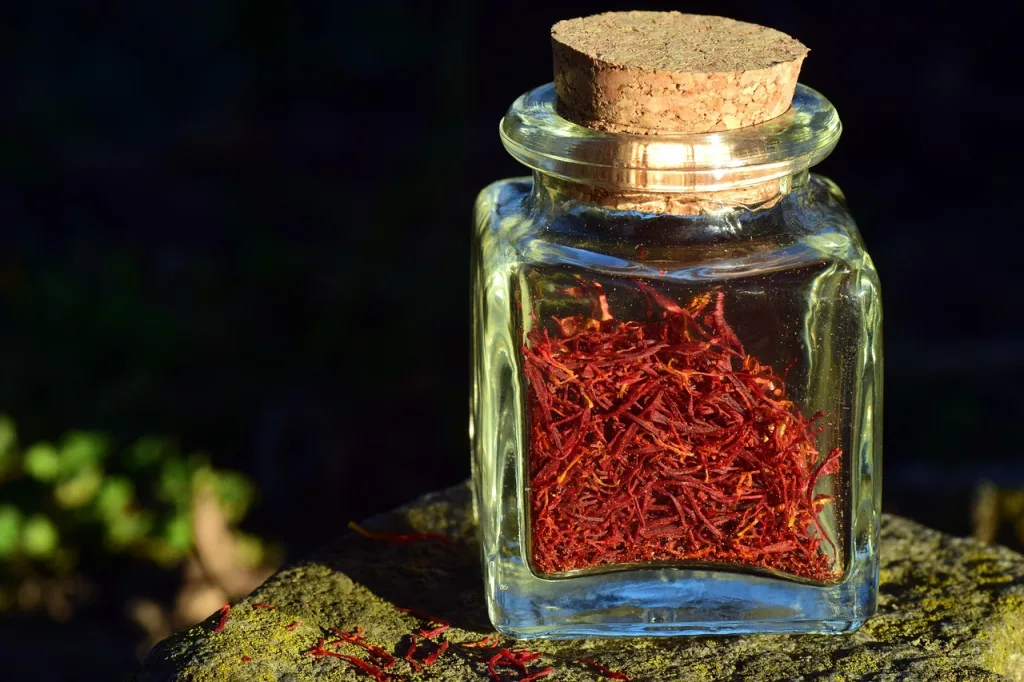
How to Tell Real Saffron from Fake
Saffron is one of the most valuable spices on Earth — literally worth more than gold by weight. But that extraordinary value comes with a downside: it makes saffron one of the most adulterated spices in the world. If you’ve ever wondered whether the saffron in your kitchen is the real deal, you’re not alone. Studies estimate that a significant percentage of saffron sold globally is either diluted, dyed, or entirely fake.
The good news? You don’t need a laboratory to check. With a few simple household tests, you can quickly determine whether your saffron is genuine or counterfeit. In this guide, we’ll walk you through seven practical purity tests, explain what the ISO 3632 grading standard means, and highlight the red flags to watch for when buying saffron.
Why Saffron Is Adulterated
Saffron’s price tag is the root of the adulteration problem. It takes roughly 150,000 crocus flowers and countless hours of manual labor to produce a single kilogram of saffron. With retail prices ranging from $5 to $10 per gram (and far more for premium grades), the financial incentive to cut corners is enormous.
Dishonest suppliers use a variety of tricks to stretch their profits. Some mix real saffron with cheaper plant materials, while others sell entirely fake threads dyed to look authentic. The most common adulterants include:
- Safflower threads — visually similar but lack saffron’s aroma and bioactive compounds
- Turmeric strands — added for color but have a completely different flavor profile
- Corn silk — dyed red to mimic saffron threads
- Colored paper or cotton threads — soaked in red dye to resemble saffron
- Old or expired saffron — real saffron that has lost its potency but is sold as fresh
Understanding these adulterants is the first step. Now let’s look at how to catch them.
Test 1 — The Water Test
The water test is the easiest and most reliable home test for saffron purity. Here’s how to do it:
- Fill a clear glass with room-temperature water.
- Drop 4–5 saffron threads into the glass.
- Wait 10–15 minutes and observe.
What real saffron does: Genuine saffron releases its color slowly. The water will gradually turn a pale golden-yellow over 10 to 15 minutes. The threads themselves remain red and intact. Even after an hour, the water won’t turn deeply colored.
What fake saffron does: Counterfeit saffron colors the water almost instantly — usually a red or bright orange hue. The threads may lose their color, turn white, or dissolve. If the water turns red quickly, you’re looking at dyed fakes.
Test 2 — The Smell Test
Your nose is a surprisingly effective tool for identifying real saffron. Authentic saffron has a complex, distinctive aroma that’s hard to replicate.
Real saffron aroma: The scent is often described as a blend of hay, honey, and wildflowers. There’s a slightly earthy, sweet undertone with hints of grass and tobacco. It’s not overpowering — it’s subtle and layered.
Fake saffron smell: Counterfeit saffron often has no aroma at all, or it smells chemical and artificial. Some dyed fakes have an overwhelmingly sweet or metallic smell. If it smells like nothing or reminds you of chemicals, that’s a red flag.
Test 3 — The Rub Test
This test takes seconds and requires nothing but your fingers.
Take a few saffron threads and rub them gently between your thumb and index finger.
Real saffron: The threads will stay intact and retain their deep red color. They may feel slightly sticky or waxy due to the natural oils. Your fingers should not be stained.
Fake saffron: Counterfeit threads will crumble or break apart easily. They’ll leave a noticeable color residue on your fingers — usually orange or red. This happens because the dye is on the surface rather than contained within the plant’s cellular structure.
Test 4 — The Taste Test
If the visual and smell tests are inconclusive, the taste test can help confirm your suspicions. Place a single thread on your tongue.
Real saffron: The flavor is distinctly bitter and slightly astringent. It should not taste sweet. The bitterness comes from picrocrocin, one of saffron’s key bioactive compounds. You may also notice a subtle floral or hay-like quality.
Fake saffron: Counterfeit saffron often tastes sweet, bland, or completely flavorless. Safflower and corn silk have no bitterness. Dyed threads may have an unpleasant chemical taste.
Test 5 — The Baking Soda Test
This lesser-known test exploits saffron’s natural chemical properties.
- Add a pinch of baking soda to a small bowl of water.
- Drop in 3–4 saffron threads.
- Observe the color change.
Real saffron: The mixture will turn yellow. This happens because the crocin in saffron reacts with the alkaline baking soda solution, producing a characteristic yellow tint.
Fake saffron: The mixture will show no significant color change, or it may turn an unexpected color (red, orange, or brown). Dyed threads don’t contain crocin, so there’s no reaction with the baking soda.
Test 6 — The UV Light Test
If you have access to a UV (ultraviolet) light — even a small UV flashlight will do — this test can be revealing.
Place saffron threads under the UV light in a dark room.
Real saffron: Genuine saffron threads will glow with a distinctive red fluorescence under UV light. This is due to the natural presence of crocin and other flavonoids that fluoresce under UV exposure.
Fake saffron: Counterfeit threads typically don’t glow under UV light. Some may show a dull or different-colored fluorescence, but they won’t produce the characteristic red glow of authentic saffron.
Test 7 — Visual Inspection
Sometimes, the simplest test is the most effective. Careful visual inspection can reveal a lot about saffron quality.
Thread shape: Real saffron threads are thin, trumpet-shaped, and slightly curly. They taper from a wider base to a narrower tip. The trumpet shape is unique to the Crocus sativus stigma.
Color: Authentic saffron is a deep, rich red with a slight orange tint at the very tips. The color should be consistent across threads. If the entire thread is uniformly bright red without any gradient, it may be dyed. If there are yellow or white streaks mixed in, the saffron may include the flower’s style (a non-stigma part that has no culinary value).
Moisture: Real saffron should be dry and brittle, not soft or damp. Excess moisture can indicate old or improperly stored saffron.
ISO 3632 Grading Standard
While home tests are useful for quick checks, the gold standard for saffron quality is the ISO 3632 grading system. This international standard, established by the International Organization for Standardization, provides a laboratory-based method for evaluating saffron quality.
The ISO 3632 standard measures the concentration of three key compounds:
- Crocin — responsible for saffron’s color (measured by absorbance at 440 nm)
- Picrocrocin — responsible for saffron’s flavor (measured at 257 nm)
- Safranal — responsible for saffron’s aroma (measured at 330 nm)
Based on these measurements, saffron is categorized into three grades:
- Category I — The highest quality, with the highest concentrations of all three compounds. This is premium saffron suitable for gourmet and medicinal use.
- Category II — Good quality saffron that meets minimum standards but has slightly lower compound concentrations.
- Category III — The lowest acceptable grade. Still real saffron, but with reduced potency in color, flavor, and aroma.
Lab testing also checks for moisture content, foreign matter, and artificial colorants — things you can’t detect at home but that reputable suppliers will test for and document. Research published in Food Chemistry has demonstrated the importance of spectrophotometric testing for reliably detecting saffron adulteration and ensuring authenticity.
Red Flags When Buying Saffron
Even before you bring saffron home, you can spot warning signs that suggest a product may not be authentic. Watch for these red flags:
Price That Seems Too Good to Be True
Real saffron is expensive — there’s no way around it. If you see saffron being sold at a fraction of the typical market price, something is wrong. A gram of genuine saffron typically costs between $5 and $10, with premium grades costing significantly more. If the price is far below that, you’re likely buying adulterated or fake product.
No Origin Information
Reputable sellers will always tell you where their saffron comes from. The major saffron-producing regions are Iran, Spain (La Mancha), Kashmir (India), and Afghanistan. If a seller doesn’t list the origin, it may be because the product is blended, low-grade, or fake.
Powdered Saffron
Powdered saffron is much easier to adulterate than whole threads. Once ground, it’s nearly impossible to visually distinguish saffron from turmeric, paprika, or other colored powders. If you must buy powdered saffron, only buy from suppliers who provide lab testing documentation.
No Lab Testing Information
Quality saffron suppliers will often share their ISO 3632 test results or at least reference their testing protocols. If a seller provides no information about quality testing, consider it a warning sign. The best suppliers are transparent about their saffron’s grade and origin.
Conclusion
Saffron adulteration is a real problem, but it’s not an unsolvable one. With these seven simple tests — the water test, smell test, rub test, taste test, baking soda test, UV light test, and visual inspection — you can confidently identify genuine saffron from fakes. Remember the golden rule: real saffron releases color slowly, smells like honey and hay, tastes bitter, and costs what it’s worth. When in doubt, buy whole threads from reputable suppliers who are transparent about origin and testing. Your dishes, your health, and your wallet will thank you.
How can I test saffron purity at home?
The easiest home test is the water test: drop a few saffron threads into a glass of room-temperature water. Real saffron slowly releases a golden-yellow color over 10–15 minutes, while fake saffron instantly turns the water red or orange. You can also try the smell test (real saffron smells like hay and honey), the rub test (real threads don’t leave color on your fingers), and the taste test (real saffron is bitter, not sweet).
What is the ISO 3632 saffron grading standard?
ISO 3632 is the international standard for saffron quality. It measures the concentration of crocin (color), picrocrocin (flavor), and safranal (aroma) using spectrophotometry. Saffron is graded into Category I (highest quality), Category II (good quality), and Category III (lowest acceptable grade). Lab testing under this standard also checks for moisture, foreign matter, and artificial colorants.
Why does fake saffron turn water red instantly?
Fake saffron is often dyed with artificial red colorants to mimic the appearance of real saffron threads. When placed in water, these surface dyes dissolve immediately, turning the water red or bright orange. Real saffron, by contrast, contains crocin pigments within its cellular structure, which release slowly and produce a gradual golden-yellow color.
Is powdered saffron safe to buy?
Powdered saffron can be authentic, but it carries a higher risk of adulteration because it’s impossible to visually verify the threads. If you buy powdered saffron, only purchase from reputable suppliers who provide ISO 3632 lab testing documentation. Whole threads are always safer because you can perform home purity tests.
What does real saffron taste like?
Real saffron tastes distinctly bitter and slightly astringent, with subtle floral and earthy notes. The bitterness comes from picrocrocin, a natural compound unique to saffron. It should not taste sweet, bland, or chemical. If your saffron tastes sweet or has no flavor at all, it may be counterfeit.