
Saffron Harvest: How the World’s Most Precious Spice Is Made
The story of saffron begins long before it reaches your kitchen—it starts in the cool fields of autumn when the purple crocus flowers bloom for only a few short weeks each year. The saffron harvest is one of the most delicate and labor-intensive agricultural processes in the world, requiring patience, precision, and centuries of tradition. Understanding how saffron is made helps explain why it is often called “red gold.”
The Short and Fragile Blooming Season
Saffron comes from the Crocus sativus flower, a perennial plant that blooms for just two to three weeks every fall. Farmers must carefully monitor the weather and soil conditions, as temperature shifts can affect both flowering and yield. Each flower contains only three crimson stigmas—the saffron threads—which must be picked by hand before the sun becomes too hot. Timing is everything; if the flowers stay open too long, the stigmas can lose their natural moisture and aroma.
Hand Harvesting at Dawn
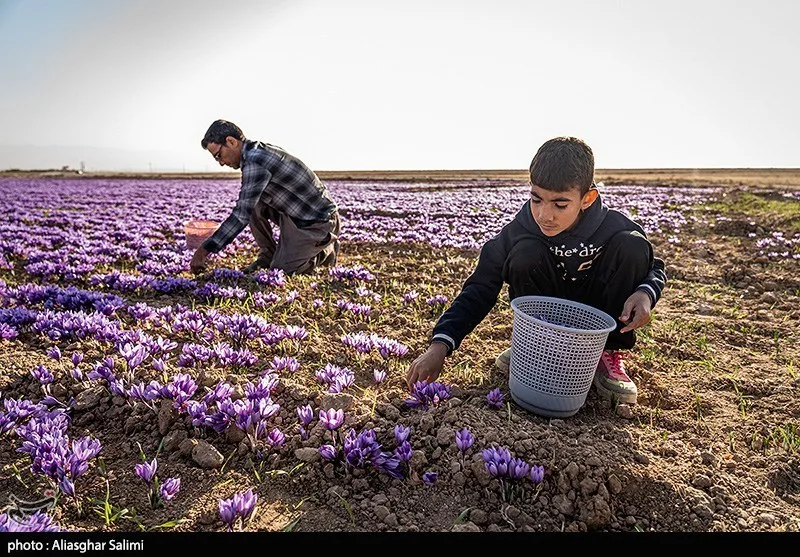
The saffron harvest takes place in the early morning hours when the flowers are still closed. This prevents sunlight from damaging the delicate filaments. Workers move quickly through the fields, handpicking each blossom one by one. It can take more than 75,000 flowers to produce a single pound of saffron. The entire process is done manually to protect the integrity of the threads and to maintain the rich color and fragrance that define pure saffron.
Separation of the Red Gold Threads
After collecting the flowers, the next step is separating the red stigmas from the rest of the bloom. This process, known as “stripping,” requires skill and a steady hand. The stigmas are gently removed, trimmed, and arranged on fine mesh trays for drying. Every millimeter of each thread matters—only the upper red portion is used for premium grades like Negin or Super Negin saffron, while the yellow or white styles are discarded.
Drying: Where Aroma and Color Develop
Once separated, the saffron threads are carefully dried over low, controlled heat. This step is crucial for locking in the aroma, color, and flavor compounds. Traditional Iranian farmers often use gentle charcoal heat or warm airflow to dry the threads evenly. Over-drying can make saffron brittle and weak in aroma, while under-drying can cause spoilage. When done correctly, this process gives saffron its vibrant red color and distinct floral scent.
Sorting and Grading
After drying, saffron is graded according to its color strength, thread length, and aroma intensity. The highest-quality types—such as Super Negin—are long, thick, and uniformly red, with a strong but clean fragrance. Lower grades may include shorter threads or portions of the yellow style. Each batch is tested for crocin (color), picrocrocin (flavor), and safranal (aroma) levels to ensure consistent quality before packaging.
How Saffron Is Made into a Final Product
From harvest to packaging, saffron undergoes minimal mechanical processing. The goal is to preserve purity and avoid contamination. Authentic saffron producers use airtight glass or vacuum-sealed containers to protect the threads from light and humidity. Each step—from flower picking to final sealing—is performed by hand in accordance with ancient methods passed down through generations.
Why the Harvest Defines Saffron’s Value
The extreme care required during the saffron harvest explains its rarity and cost. Every stage—manual picking, separation, drying, and sorting—demands precision and time. Unlike other crops, saffron cannot be harvested by machine, and there are no shortcuts to quality. The result is a spice that captures the essence of craftsmanship and nature’s perfection in every strand.
Experience the Result of True Craftsmanship
The next time you add saffron to rice, desserts, or tea, remember that each thread represents hours of meticulous work and thousands of blossoms carefully gathered by hand. Choosing authentic, ethically sourced saffron supports the farmers who keep this ancient art alive. To experience the full richness and purity of genuine Iranian saffron, explore our Saffron Threads Collection—harvested, hand-selected, and packaged with care.
The saffron harvest is not just an agricultural process—it is a centuries-old ritual that connects the soil, the flower, and the human hand. Each harvest brings a reminder of nature’s patience and the artistry required to produce one of the world’s most precious natural treasures.
When Does Saffron Bloom? Understanding the Autumn Flowering Season
The Crocus sativus is an autumn-blooming crocus, which sets it apart from most flowering plants that bloom in spring. The flowering period typically begins in mid-October and lasts through early November, depending on the region and climate. In Iran’s Khorasan province — which produces the vast majority of the world’s saffron — the blooms usually appear in the third or fourth week of October.
The timing is influenced by temperature and rainfall. A warm, dry summer followed by cool autumn nights creates ideal blooming conditions. If the weather is too warm, flowering is delayed. If autumn rains are heavy, the flowers can be damaged and yields reduced. Farmers watch the forecast closely during this period, as a single frost or heat wave can significantly impact the harvest.
Interestingly, the Crocus sativus is a sterile plant — it cannot reproduce through seeds. Instead, it propagates through corms (bulb-like structures) that must be dug up, divided, and replanted manually. This adds another layer of labor to saffron cultivation that most people never see.
The Dawn Harvest: Why Timing Matters
The most critical window in the saffron harvest is the period between 4:00 AM and 7:00 AM, before the sun rises and the flowers open fully. During these hours, the stigmas are at their peak potency — rich in color, aroma, and flavor compounds. Once sunlight hits the open flowers, the stigmas begin to lose moisture rapidly, and their volatile oils start to evaporate.
Farmers work in darkness, often by the light of headlamps or lanterns, moving through rows of crocuses and picking each flower with a gentle twist-and-pull motion. The flowers are collected in baskets and transported to a processing area where the stigmas are separated. The entire picking operation must be completed within a few hours each day, as new flowers bloom overnight and yesterday’s unpicked flowers will have already lost quality.
This daily rhythm repeats for the entire two-to-three-week flowering season. During peak bloom, a single hectare of saffron can produce thousands of flowers in a single night, requiring entire families and sometimes hired workers to work through the early morning hours.
Traditional vs Modern Harvesting Methods
While the fundamental process of saffron harvesting hasn’t changed in millennia, some modern innovations have been introduced. Traditional harvesting relies entirely on human hands for picking and stripping, with sun-drying or charcoal-drying methods. In some modern operations, greenhouses and controlled-environment agriculture have been used to extend the growing season, and mechanical dryers with precise temperature controls have replaced charcoal fires.
However, the core steps — picking flowers by hand and separating stigmas by hand — remain unchanged. No machine has been invented that can handle the delicate crocus flowers without damaging the stigmas. The human touch is not just tradition; it’s a technical necessity. Even in the most modern saffron operations, the harvest looks remarkably the same as it did 3,000 years ago in ancient Persia.
Harvest Yields: How Much Saffron Per Flower and Per Field
The yield of saffron is remarkably low, which is the primary reason for its high cost. Here are the numbers that put it in perspective:
- Per flower: 3 stigmas, weighing approximately 30 mg fresh or about 7 mg dried
- Per kilogram of dried saffron: Approximately 150,000 flowers
- Per hectare of land: Typically 4–10 kg of dried saffron per year, depending on soil quality, climate, and farming practices
- Labor per kilogram: 370–460 hours of manual work
These numbers explain why saffron is the world’s most expensive spice by weight — we break down the full story of what makes saffron so expensive. No other agricultural product requires this ratio of labor to output. A farmer working diligently for an entire harvest season may produce only a few kilograms of finished saffron from a sizable field.
The Human Side: Saffron Farming Communities
Behind every thread of saffron is a community of farmers whose livelihoods depend on this harvest. In Iran’s Khorasan province, entire villages participate in the saffron harvest. It’s a communal event that brings together families, neighbors, and sometimes seasonal workers. Children help with the lighter tasks, elders supervise the stripping and grading, and everyone shares in the labor.
For these communities, saffron is more than a crop — it’s a cultural identity. The harvest season is marked by festivals, shared meals, and storytelling. Songs are sung in the fields to keep workers’ spirits up during the pre-dawn hours. Recipes passed down through generations feature the saffron that families have grown with their own hands.
Supporting ethically sourced saffron means supporting these communities. When you buy saffron directly from reputable sellers who work with farmers rather than through multiple layers of middlemen, more of your money reaches the people who actually grow and harvest the spice.
Sustainability Challenges in Saffron Harvesting
Saffron farming faces several sustainability challenges. Climate change is perhaps the most significant — shifting weather patterns, unpredictable rainfall, and rising temperatures threaten traditional growing regions. In Khorasan, droughts have become more frequent, and some farmers have seen yields drop by 30% or more in recent years.
Water scarcity is another critical issue. Saffron requires less water than many crops, but it still needs irrigation during certain growth stages. In regions where groundwater is being depleted, saffron farming’s future is uncertain. Additionally, soil degradation from over-farming and the use of chemical fertilizers is reducing the quality of saffron in some areas.
Despite these challenges, saffron remains a relatively sustainable crop compared to many alternatives. It requires no chemical pesticides, grows in arid regions where other crops fail, and provides income for rural communities that have few other economic opportunities. The key to long-term sustainability lies in supporting traditional farming practices, investing in water-efficient irrigation, and ensuring fair compensation for farmers.
What time of year is saffron harvested?
Saffron is harvested in autumn, typically from mid-October to early November. The exact timing depends on the region’s climate and weather conditions during the growing season.
Why must saffron be picked before sunrise?
Picking saffron before sunrise protects the stigmas from sunlight, which causes them to lose moisture and volatile aromatic compounds. The flowers are also easier to handle when they’re still closed.
How many flowers does it take to make one gram of saffron?
It takes approximately 150 flowers to produce one gram of dried saffron threads. To produce one kilogram, about 150,000 flowers are needed.
Can saffron be harvested by machine?
No. The Crocus sativus flowers are too delicate for mechanical harvesting. Every attempt to automate the process has resulted in damaged stigmas and reduced quality. Saffron must be harvested by hand.
How long does the saffron harvest season last?
The flowering season lasts only two to three weeks. During this period, farmers must pick flowers daily as they bloom, making it one of the most intense harvest periods in agriculture.