
Sweden runs on saffron every December. On Lucia Day — December 13 — the whole country bakes lussekatter: golden S-shaped buns scented with saffron, dotted with raisins, and eaten with coffee in the dark of the Nordic winter.
It’s the world’s most beloved saffron bread, and it turns out it’s completely achievable in a home kitchen. One dough, one shape, ten minutes in the oven.
Why Sweden Loves Saffron
Saffron arrived in Scandinavia through medieval trade routes and was so expensive it became a festival luxury — saved for the year’s brightest celebrations. Lucia Day, marking the return of light, became its day. The buns’ golden color is the point: sun-colored bread against the darkest month.
Swedish Saffron Buns (Lussekatter)
Ingredients
- 1 tbsp saffron threads
- 1 cup (240 ml) whole milk
- ½ cup (115 g) butter
- ¼ cup (50 g) sugar + a pinch for the saffron
- 1 packet (2¼ tsp / 7 g) instant yeast
- 4–4½ cups (500–560 g) all-purpose flour
- 1 egg, room temperature
- ½ tsp salt
- 1 egg, beaten (for wash)
- ~24 raisins
Instructions
1. Bloom the saffron. Warm the milk with the butter, the saffron, and a pinch of sugar to about 120°F (50°C) — hot enough to bloom the saffron, not hotter. Let steep 10–15 minutes off heat. The milk should turn deep gold.
2. Check the temperature. The mixture must cool to 95–100°F (37°C) before the yeast goes in — hot saffron milk kills yeast. This is the step everyone rushes.
3. Make the dough. Whisk the yeast into the warm milk, then add the egg, sugar, and salt. Gradually knead in the flour — start with 4 cups, add more only if sticky. Knead 8–10 minutes until smooth and elastic.
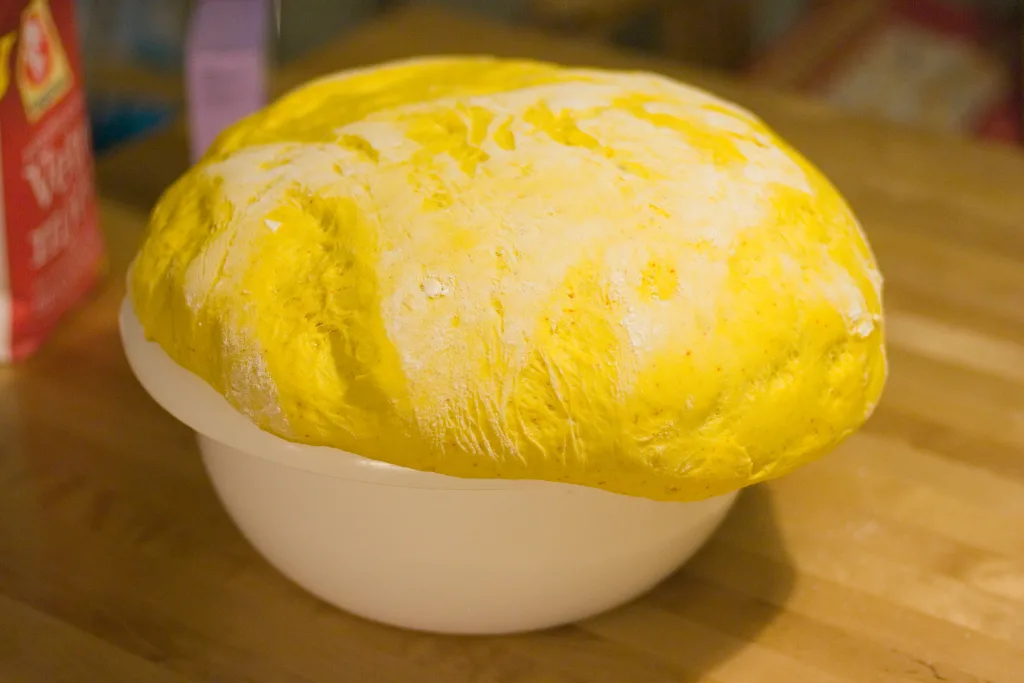
4. First rise. Cover and let rise until doubled, 60–90 minutes in a warm kitchen.
5. Shape the buns. Divide into 12 pieces. Roll each into a rope ~10 inches long, curl the ends toward the center in opposite directions to form an S, and tuck a raisin into each curl.
6. Second rise. Cover and rest 30 minutes; the buns should look puffy, not doubled.
7. Bake. Brush with beaten egg. Bake at 425°F (220°C) for 8–10 minutes, until deep gold — the color of good saffron itself.
8. Cool on a rack — and try to wait. Warm lussekatter with a sliver of butter is the entire point of December in Sweden.
Tips for Perfect Lussekatter
- The saffron pays for itself here. 1 tbsp is generous — these buns should be unmistakably saffron. (Why real saffron costs what it does.)
- Don’t over-flour. A slightly tacky dough makes a softer bun. Add the last ½ cup gradually.
- Shaping variety: classic forms also include the crown (krona) and the simple coil — but the S is the icon.
- They freeze beautifully — 3 months, well-wrapped. Thaw, then 10 seconds in the microwave for “just-baked.”
FAQ
Can I use active dry yeast instead of instant?
Yes. Bloom it in the saffron milk at 100–105°F for 5 minutes first, and expect a slightly longer rise.
Why are my buns dense?
Usually two causes: the milk was too hot when the yeast went in, or the dough was over-floured. Measure the milk temperature — 37°C is the target.
Can I make the dough ahead?
Yes. After shaping, refrigerate the buns covered overnight and bake from cold the next morning, adding 2–3 minutes. Swedish households do exactly this for Lucia morning.
Why is saffron used in Swedish bread?
Saffron was a medieval luxury import reserved for feasts; its golden color made it the ingredient of Lucia Day — the festival of light in the darkest week of the year.
What do you serve with lussekatter?
Coffee or glögg (mulled wine), and preferably candlelight.
The Bottom Line
Lussekatter is proof that saffron belongs in baking, not just rice and tea. Bloom it in warm milk, respect the yeast temperature, and you’ll pull the most photogenic thing your oven has produced all year.
Keep going down the saffron dessert road with no-churn saffron ice cream — or return to the savory canon with the complete saffron rice guide. The full technique library lives in cooking with saffron.
—