
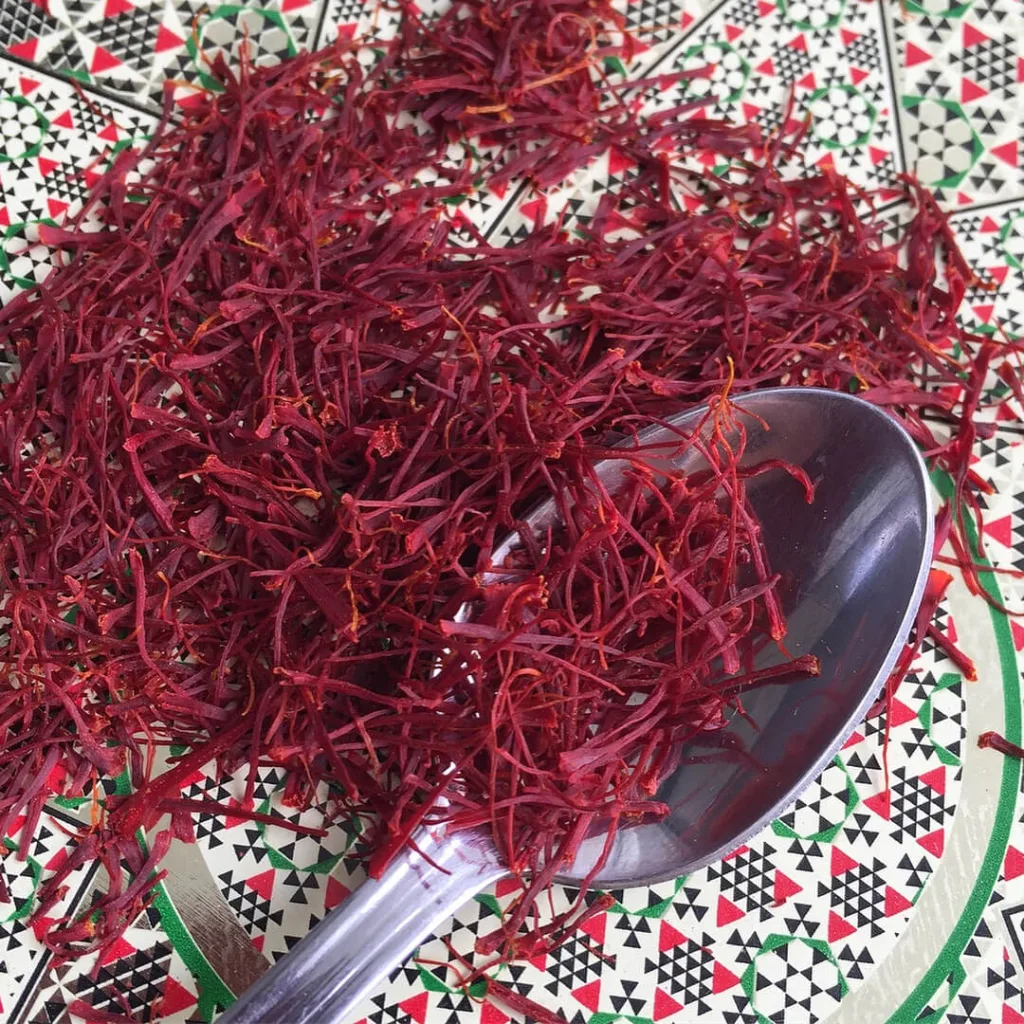
What Does Saffron Taste Like?
Saffron tastes earthy and floral with a subtle bitter-sweet edge that many cooks describe as honey-like, layered over faint hay and grass notes. The flavor is delicate rather than loud: a thread chewed on its own starts out bitter and herbal, then slowly releases a warm, perfumed sweetness that lingers on the palate. That slow reveal is saffron’s signature. Its taste develops as the threads steep, which is why properly bloomed saffron tastes rounder, sweeter, and far more aromatic than the raw threads ever suggest. If your first impression of saffron was “expensive and flavorless,” the threads were almost certainly never given the time and warmth they needed to open up.
In this guide, you’ll learn exactly how saffron tastes, which compounds create that flavor, how heat and steeping transform it, and how to recognize the real thing before you spend a fortune on an imitation.
The Short Answer
Saffron tastes earthy, floral, and subtly bitter-sweet, with honey notes and a hay-like undertone. It is never spicy, never salty, and never cloyingly sweet. The closest everyday description is a savory perfume: mostly aroma, a gentle bitterness for structure, and a soft floral sweetness that only fully appears after the threads have steeped in warm liquid. A small pinch is enough to perfume an entire pot of rice with its golden, unmistakably warm character — a flavor that sits somewhere between honey, hay, and a flower garden after rain. It’s a flavor profile no other spice replicates.
The Science Behind Saffron’s Flavor
Saffron is the dried stigmas of the Crocus sativus flower, and nearly everything you taste comes from just a handful of compounds that concentrate in those tiny red threads. Three of them matter most — one for bitterness, one for aroma, and one for color — and understanding each one explains why saffron tastes the way it does, and why preparation makes such a dramatic difference in the glass.
Picrocrocin — the Bitter Compound
Picrocrocin is a bitter glycoside found almost exclusively in saffron, and it is the reason a raw thread on your tongue tastes sharply bitter before anything else happens. That bitterness is not a flaw; it is the backbone of saffron’s flavor and the counterweight that keeps its perfume from tipping into cloying territory. Research into saffron’s chemistry identifies picrocrocin and safranal as the compounds responsible for the spice’s characteristic taste and aroma, with picrocrocin measured alongside the pigments as a marker of quality. High-quality saffron carries a pronounced but pleasant bitterness; if bitterness is the only thing you notice minutes later, the dose was too high or the saffron was stale.
Safranal — the Aroma
Safranal is the volatile compound that gives saffron its unmistakable smell: floral, hay-like, faintly sweet, and slightly medicinal in a way that reads as clean rather than harsh. Safranal actually forms during drying, when picrocrocin breaks down — one more reason traditional slow drying matters so much to the final flavor. Because safranal is volatile, it is also fragile: prolonged boiling, very high heat, or months of storage in a warm, bright kitchen will let the aroma fade long before the color does. Much of what people call saffron’s “taste” is really its aroma reaching the nose from the back of the throat, which is why blooming the threads in warm liquid — releasing that aroma gently — tastes so different from dropping them straight into a rolling boil.
Crocin — the Color
Crocin and its related carotenoids are the pigments that turn water, rice, and milk a luminous golden-yellow. Crocin itself contributes little direct flavor, though the deep color it delivers is inseparable from how we experience the spice: a golden saffron broth reads as rich and warm before the first sip. Intense, even coloration in the threads is also one of the fastest visual clues to crocin content — and therefore to overall quality — because the pigments concentrate in the red stigma tips and fade toward the pale yellow base.
Together, these three compounds explain the whole experience of tasting saffron: picrocrocin delivers the first bitter impression, safranal supplies the honey-and-hay perfume that follows, and crocin paints the golden color that makes every sip feel richer. A good harvest balances all three — enough bitterness for structure, enough aroma to fill the room, enough color to glow. When tasters say a saffron is “flat” or “one-dimensional,” they are usually describing threads where one of the three has faded.
How Saffron’s Taste Changes When Cooked
Understanding the saffron flavor journey starts before heat ever touches the threads.
Raw saffron threads and bloomed saffron taste like two different spices. Straight from the jar, a thread is bitter, dry, faintly grassy, and a little astringent — interesting, but hardly worth its price. Soaked in warm water, broth, milk, or white wine for ten to twenty minutes, the same threads surrender their flavor slowly: the liquid turns gold, the aroma blooms into honey and hay, and the bitterness softens into something sweet and floral. Chefs call this step blooming, and it is the single most important technique for tasting what saffron really has to offer.
Heat completes the transformation — but only gentle heat. Add the bloomed threads and their soaking liquid early in cooking, as you do for paella, risotto alla milanese, or a Persian tahdig, and the flavor has time to weave itself through the dish, losing its raw edge and gaining roundness. Boiling hard for a long time does the opposite: it drives off the volatile aromatics and leaves behind flat color with a one-note bitterness. A brief toast in a dry pan before steeping can deepen the flavor further, but ten seconds too long and the delicate aromatics scorch.
The practical rule is simple: warm and slow in, never a hard boil, and always add the soaking liquid along with the threads — by now it holds most of the flavor. Water around 60–80°C (140–175°F) extracts aroma beautifully; anything furiously bubbling wastes it. Give the threads a full twenty minutes to steep and you will taste saffron the way it is meant to taste.
Saffron Taste Compared to Other Spices
Because saffron is often imitated and rarely described, it helps to place it next to spices you already know. None of them taste the same, but each comparison highlights a different facet of saffron’s character — and knowing the differences protects you from the most common counterfeits.
| Spice | Its Taste | How It Compares to Saffron |
|---|---|---|
| Turmeric | Earthy, peppery, musky, mildly bitter | Shares saffron’s earthiness and golden color, but lacks the floral, honey-like aroma entirely |
| Safflower (“fake” saffron) | Bland, faintly bitter, hay-like | Imitates the color convincingly but delivers none of the perfume or sweet finish |
| Cardamom | Sweet, citrusy, herbal, slightly minty | Both are perfumed spices, but cardamom is sharp and eucalyptus-like where saffron is honeyed and earthy |
What Real Saffron Should Taste Like (and What Fake Tastes Like)
Real saffron should taste pleasantly bitter with a clean floral sweetness behind it — never harshly medicinal, never chemical, and never sweet on its own the way candy is sweet. The bitterness should soften within seconds into honey and hay, leaving a warm, slightly perfumed finish that can linger for several minutes. The threads themselves should feel dry and brittle, and they should tint warm water golden slowly, releasing pigment and aroma gradually over ten minutes or more rather than instantly.
Fake saffron tells on itself quickly. Dyed corn silk, safflower petals, and colored grass strands tend to taste sweet, grassy, or like nothing at all — and they release their red or orange dye immediately in cold water, often streaking before your eyes. Genuine saffron releases a slow golden yellow, never a fast red. If threads feel oily, rubbery, or leave color on your fingers, dye is involved. Price is a signal too: real saffron requires hand-harvesting roughly 150 flowers for a single gram, so “bargain” saffron at a fraction of the market rate is almost never the genuine article. And if the “saffron” tastes pleasantly sweet straight from the packet, be suspicious: real saffron rarely rewards impatient tasting. When in doubt, trust the slow bloom — it is the one thing counterfeiters cannot fake.
Flavor Pairings: What Goes Well with Saffron
Saffron is a team player. Its flavor is potent but subtle, so it shines next to ingredients that give it a stage rather than compete with it. Rice is the classic partner — the neutral grains absorb both the golden color and the perfume, which is why paella, biryani, and risotto alla milanese all lean on saffron as their signature note. Potatoes, bread, and other mild starches play the same role, acting as a blank canvas for the spice to paint on.
Seafood loves saffron’s faint briny sweetness; bouillabaisse and Persian fish stews prove the pairing centuries deep. Dairy — milk, cream, yogurt, and soft cheeses — carries its aroma beautifully and softens the bitterness, making saffron ice cream and milk-based puddings natural territory. Citrus, especially lemon and orange zest, lifts saffron’s floral side; honey mirrors its sweet notes and amplifies them; and vanilla sits close enough to saffron’s perfume that the two blend into something quietly luxurious in custards and panna cotta.
On the savory side, garlic, tomatoes, onions, and mild white fish frame saffron without burying it. A pinch of cinnamon or a bay leaf can extend its warmth in stews. What to avoid: anything aggressively smoky, heavily vinegared, or intensely spiced with cumin or chili, all of which steamroll saffron’s subtlety. Whatever you pair it with, keep the rest of the seasoning restrained — saffron speaks softly, and it disappears in a crowd.
Common Questions
Is saffron sweet or bitter?
Saffron is both. Raw threads taste distinctly bitter, but once steeped in warm liquid the bitterness softens and a floral, honey-like sweetness emerges. Much of what people remember as saffron’s sweetness is actually its aroma reaching the nose from the back of the throat.
Why does saffron taste like hay?
The hay-like flavor comes from safranal, the volatile compound behind saffron’s aroma. A gentle hay or dried-grass note is a hallmark of genuine saffron, not a defect. If the medicinal edge becomes harsh or chemical, the dose was too large or the saffron is past its best.
How much saffron should I use in a dish?
A small pinch of 10–15 threads (roughly 20–30 mg) is enough for a dish serving three to four people. Saffron’s flavor intensifies as it steeps, so start small, bloom the threads fully, and taste before adding more — you can always add, but you cannot take back.
Can you eat saffron threads raw?
You can, but you will mostly taste bitterness. Raw threads are dry, astringent, and only faintly aromatic. Steeping them in warm water, milk, or broth for 10–20 minutes unlocks the honeyed, floral flavor saffron is famous for, so blooming is always worth the extra step.
What spice tastes closest to saffron?
Turmeric comes closest for color and earthiness, but it tastes peppery and musky rather than floral. Safflower imitations look convincing yet taste bland and hay-like. Nothing truly replicates saffron’s honey-floral aroma, which is exactly why it remains the world’s most prized spice.