
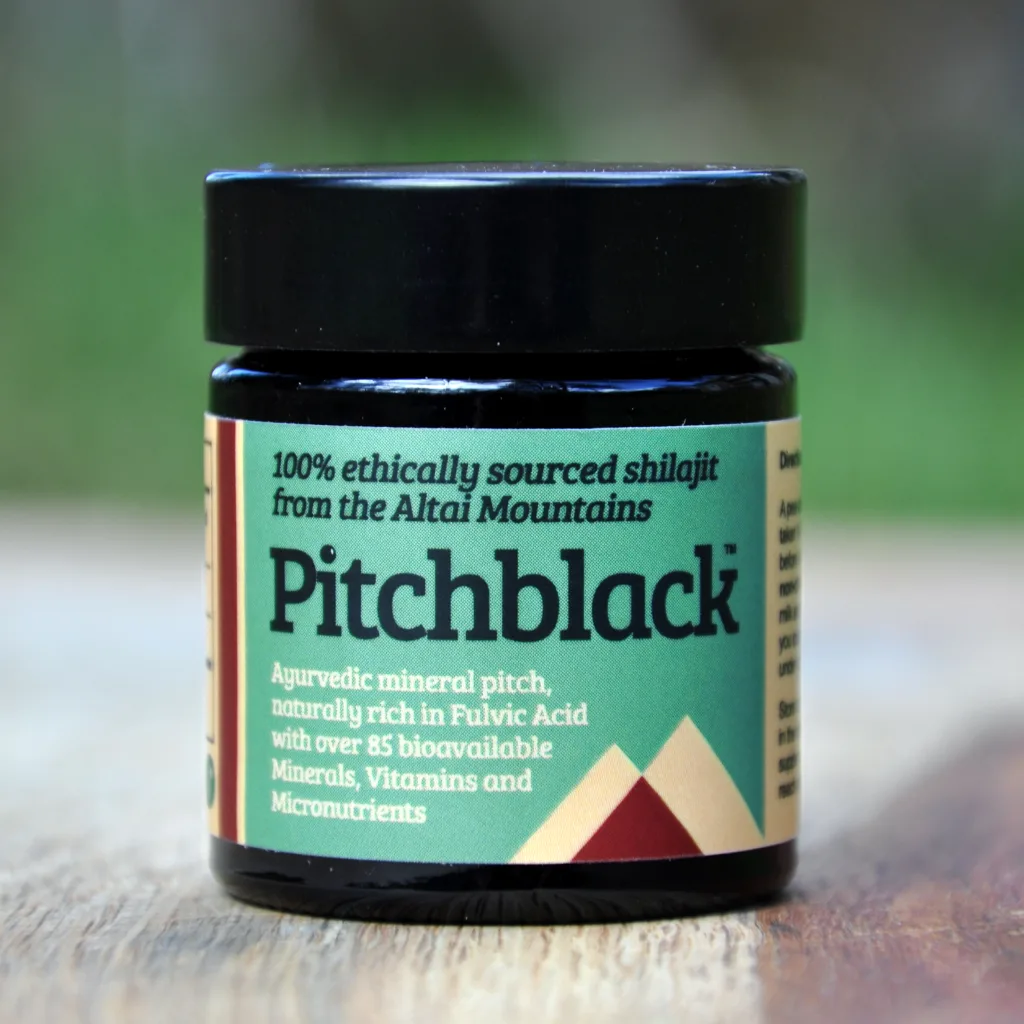
Shilajit has a 3,000-year safety record in traditional use — but “ancient” doesn’t automatically mean “harmless.” Arsenic is ancient too.
The honest answer on shilajit safety: purified shilajit from a verified source has a strong safety profile in studied doses. The real danger isn’t shilajit itself — it’s contaminated or fake product.
This guide covers the documented side effects, who genuinely should avoid it, and how to cut your risk to near zero. (New to shilajit? Start with what Himalayan shilajit actually is.)
The #1 Safety Risk: Contamination, Not the Herb
This deserves the top spot because it dwarfs everything else on this page.
Shilajit is a mountain resin that absorbs whatever surrounds it — including heavy metals. Raw or poorly processed shilajit can contain:
- Lead — neurotoxic, especially dangerous for children
- Arsenic — documented in low-grade commercial shilajit
- Mercury and cadmium — found in unverified samples
This isn’t theoretical: studies analyzing commercial shilajit products have found heavy metal contamination in poorly processed ones, while properly purified resin (via traditional purification or standardized processing) tested clean. The takeaway isn’t “shilajit is dangerous” — it’s “unverified shilajit is a coin flip.”
The rule that eliminates this risk: only buy resin with published third-party lab results (Certificate of Analysis) showing heavy metals below safe thresholds. No lab tests, no purchase. Period.
Documented Side Effects
In studied doses (200–500 mg purified resin daily), side effects are uncommon and mild. Reported ones include:
- Digestive upset — nausea, diarrhea, stomach discomfort, most common when taken on an empty stomach or at high doses
- Dizziness or headaches — occasionally reported in the first days of use
- Skin rash / allergic reactions — rare, but possible with any bioactive compound; stop use if this occurs
- Increased heart rate — anecdotal reports, usually at excessive doses
Almost all of these cluster around two causes: taking too much, or taking impure product. Starting with a small dose (a rice-grain-sized portion) for the first week minimizes them.
Overdose: What Happens If You Take Too Much
There’s no documented danger at reasonable doses, but the studied range is 200–500 mg/day for a reason. Taking grams per day increases:
- Iron intake (see hemochromatosis below)
- Mineral load your kidneys must process
- Odds of the digestive side effects above
More is not better. Stay in the studied range.
Who Should NOT Take Shilajit
Absolute avoid:
1. People with hemochromatosis (iron overload) — shilajit’s ionic iron and fulvic acid improve iron absorption, which is a benefit for iron-deficient people and a genuine hazard for those who store too much
2. Pregnant and nursing women — zero safety data in these populations; not worth the risk
3. Anyone with known heavy-metal toxicity — adding a mineral-dense resin to that burden is a bad idea
Talk to a doctor first:
4. Gout or high uric acid — limited evidence suggests caution while uric acid metabolism settles
5. Kidney disease — mineral processing passes through the kidneys; impaired function changes the math
6. Blood thinner users — theoretical interaction risk; no formal studies; get medical clearance
7. Diabetes medication — shilajit may influence blood glucose; combining with medication risks stacking effects
Medication Interactions
Direct interaction studies are limited — here’s the honest state of knowledge:
- No well-documented major interactions exist in published research
- Theoretical concerns (based on shilajit’s mineral content and metabolic effects) cover anticoagulants, diabetes drugs, and iron supplements
- Standard practice: if you take prescription medication, leave a 2-hour gap and clear it with your prescriber
This is the same standard we apply to saffron and supplement dosing — natural doesn’t mean interaction-free.
Is Shilajit Safe Long-Term?
Traditional use spans centuries, and clinical studies up to 3 months show no concerning effects at proper doses. Long-term modern studies beyond that window don’t exist yet.
The reasonable read: cycling (e.g., 8–12 weeks on, 2–4 weeks off) mirrors both traditional use patterns and the length of clinical evidence. Not mandatory, but a sensible hedge.
How to Make Shilajit as Safe as Possible
1. Purified resin only — from a seller publishing Certificate of Analysis lab results for heavy metals
2. 200–500 mg/day — stay in the studied range
3. Start small — a rice-grain portion for the first week to test tolerance
4. Take with food if you have any digestive sensitivity
5. Skip it entirely if you’re in the avoid categories above
For what you get in exchange for those precautions, see our evidence-ranked guide to shilajit’s benefits — or if you’re exploring combinations, stacking saffron with shilajit.
FAQ
Is shilajit safe to take daily?
Yes, at 200–500 mg of purified resin per day. Clinical trials used this range for up to 3 months with no serious adverse effects. Start with a small dose to test tolerance.
Does shilajit contain heavy metals?
Purified shilajit from a lab-tested source should not contain dangerous levels. Raw or poorly processed shilajit can contain lead, arsenic, or mercury. Only buy products with published third-party lab results.
Can shilajit damage kidneys or liver?
No evidence of harm at studied doses in healthy people. If you have existing kidney disease, avoid shilajit — its mineral content requires functional kidneys to process.
Who should not take shilajit?
People with hemochromatosis, pregnant or nursing women, and those with kidney disease or known heavy-metal toxicity. Check with a doctor first if you take blood thinners or diabetes medication.
What are the symptoms of taking too much shilajit?
Nausea, diarrhea, dizziness, and headache are the most common. These typically appear at doses well above the studied 200–500 mg range and resolve when you stop or reduce the dose.
The Bottom Line
Shilajit’s safety story is simple: the compound has a clean record; the supply chain is where the danger lives. Heavy-metal contamination in unverified products is the real risk — and it’s fully avoidable with lab-tested resin.
If you’re a healthy adult, not in the avoid categories, and you source purified resin: shilajit at proper doses is one of the lower-risk supplements in the natural wellness space. Choose the source like it matters — because for this supplement, it’s the only decision that really does.
—