
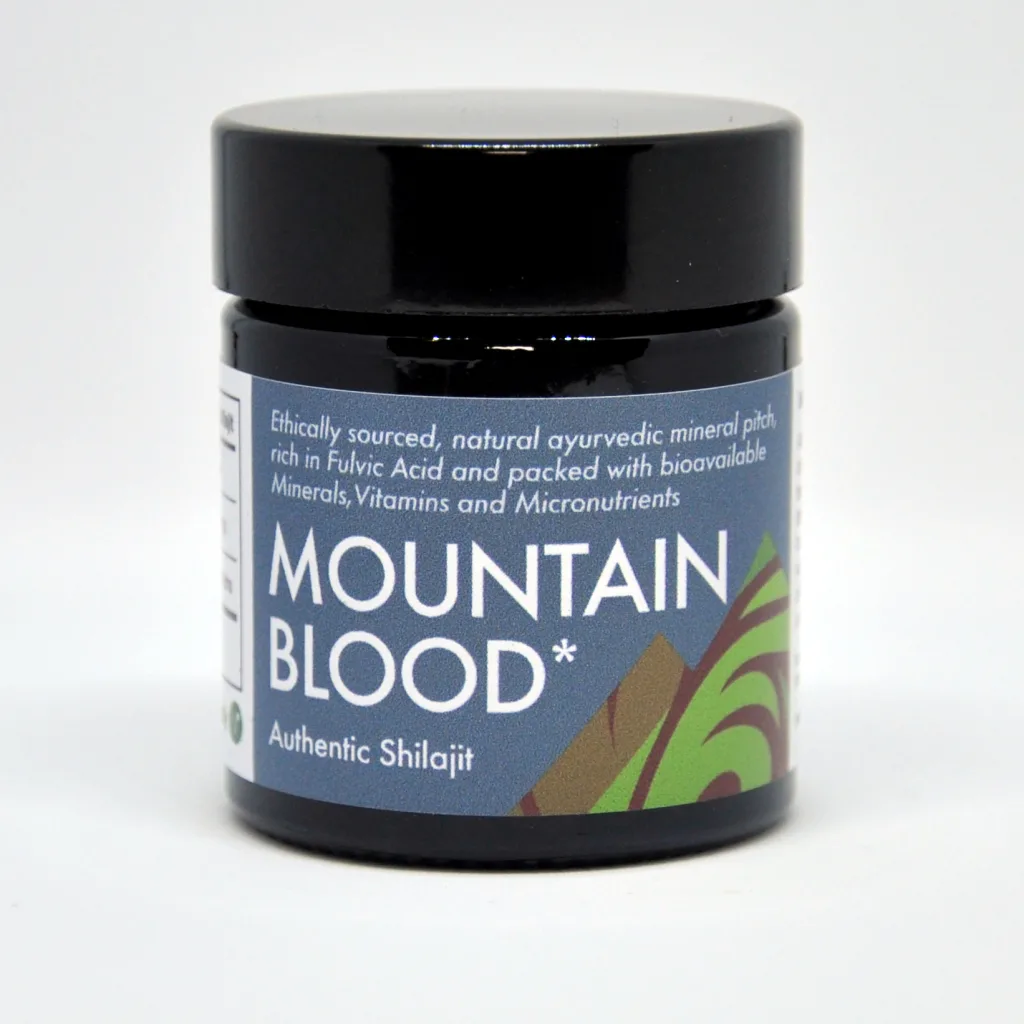
Shilajit has quietly become one of the most searched supplements in the world — yet most people who’ve heard of it still can’t answer a basic question: what actually is it?
If you’ve seen the dark, tar-like resin in wellness stores or TikTok reviews and wondered whether it’s a mushroom, an herb, or something else entirely, this guide clears it up — what Himalayan shilajit is, where it comes from, what’s inside it, and what the science says.
What Is Himalayan Shilajit?
Himalayan shilajit is a sticky, blackish-brown resin that seeps from cracks in high-altitude rocks in the Himalayan mountains. It’s not a plant, animal, or mineral in the traditional sense — it’s a centuries-old decomposition product: the compressed remains of plant matter that broke down slowly under pressure between layers of rock.
That process takes centuries, and it produces one of the densest natural sources of trace minerals and organic compounds found anywhere on earth.
In Sanskrit, shilajit means “conqueror of mountains and destroyer of weakness” — a name earned over thousands of years of use in Ayurvedic medicine, where it’s classified as a rasayana (rejuvenating substance).
Where Does It Come From?
Authentic shilajit is harvested at altitudes of 10,000–16,000 feet (3,000–5,000 m) across the Himalayas, primarily in:
- India — Ladakh, Uttarakhand, Himachal Pradesh
- Nepal — the high Himalayan belt
- Pakistan — Gilgit-Baltistan
- Neighboring ranges — Karakoram, Pamir, Altai (similar deposits, different labeling)
The resin forms when summer heat softens it enough to seep from rock fissures. Harvesters collect it raw, then it’s purified to remove rock debris and contaminants — a step that matters enormously for safety (more on that below).
What’s Actually Inside It?
Shilajit isn’t a single compound — it’s a complex mixture. The two components that get the most scientific attention:
- Fulvic acid (typically 15–20% in purified resin) — an organic compound that may help the body absorb minerals and has been studied for antioxidant and anti-inflammatory effects
- Humic acids — related compounds that support the mixture’s mineral-carrying structure
- 84+ trace minerals in ionic form — including iron, zinc, magnesium, and copper
- Dibenzo-alpha-pyrones (DBPs) — unique compounds studied for energy metabolism
This mineral density is the core of shilajit’s appeal: it delivers a broad spectrum of trace elements many modern diets lack, in a form the body can readily use.
What Is It Used For?
Shilajit has been used in Ayurvedic tradition for energy, vitality, and healthy aging. Modern research — early-stage but growing — has explored:
- Energy and fatigue — studies on mitochondrial function have shown promising results
- Testosterone — a small clinical trial in healthy men showed modest increases in total testosterone
- Cognitive support — early research on fulvic acid and brain health
- Altitude adaptation — its traditional Himalayan use case
- Recovery and stamina — studied in combination with other supplements
Important: most of this research is preliminary. If someone promises dramatic hormone or energy transformations, be skeptical. (We hold saffron claims to the same standard — see our saffron dosage guide for how we think about evidence-based supplement use.)
Resin vs. Powder vs. Capsules
Not all shilajit products are equal. The three main forms:
- Resin — the least processed, most traditional form. Generally considered the gold standard for potency. Requires dissolving in liquid before use.
- Powder — spray-dried resin, often cut with fillers. Cheaper but lower fulvic acid content.
- Capsules — convenient, but often contain low-quality powdered extract.
If you’re going to try shilajit, purified resin from a reputable source is the form with the strongest traditional and analytical track record.
Is Himalayan Shilajit Safe?
Generally yes — when it’s properly purified and sourced. The risks come from impurities:
- Raw or poorly processed shilajit can contain heavy metals (lead, arsenic, mercury, cadmium)
- Contamination with mycotoxins and free radicals is a documented problem in low-grade products
- Look for suppliers who publish third-party lab test results (Certificates of Analysis) for heavy metals
This is the same standard we apply to saffron — purity testing isn’t optional in this category. If a seller can’t show lab results, walk away.
Who should avoid it: pregnant or nursing women, people with hemochromatosis (iron overload), gout, or those on blood thinners or diabetes medication should talk to a doctor first.
Shilajit and Saffron: A Natural Pairing
Both are ancient, premium, labor-intensive natural products backed by centuries of traditional use and growing modern research — and they target different but complementary wellness goals. We cover the comparison in depth here:
FAQ
Is shilajit a mushroom?
No. It’s a mineral resin formed from decomposed plant matter compressed in rock over centuries. It contains no mushroom material.
Why is it called “Himalayan” shilajit?
Because the highest-quality deposits come from high-altitude Himalayan rock. Similar substances exist in other mountain ranges (Altai, Andes), but Himalayan shilajit has the longest documented history of use.
What does shilajit taste like?
Bitter, smoky, and intensely earthy — somewhere between tar and strong black tea. Most people dissolve it in warm water, milk, or tea to make it palatable.
How much fulvic acid should quality shilajit contain?
Purified resin typically contains 15–20% fulvic acid by weight. Products listing much lower amounts are usually cut with fillers.
Can you take shilajit every day?
Traditional and modern use both support daily consumption of purified resin in small amounts (typically a pea-sized portion, ~300–500 mg). Start small and assess tolerance.
The Bottom Line
Himalayan shilajit is a mineral-rich resin with genuine historical pedigree and promising early research — surrounded by a market full of low-quality imitations. The substance deserves attention; the hype deserves skepticism.
If you explore it, prioritize purified resin with published lab testing. For a detailed, evidence-ranked breakdown, see shilajit benefits: what the science actually says. And if your wellness goals lean more toward mood, sleep, and antioxidant support, saffron remains one of the best-studied options in the natural supplement world.
—