
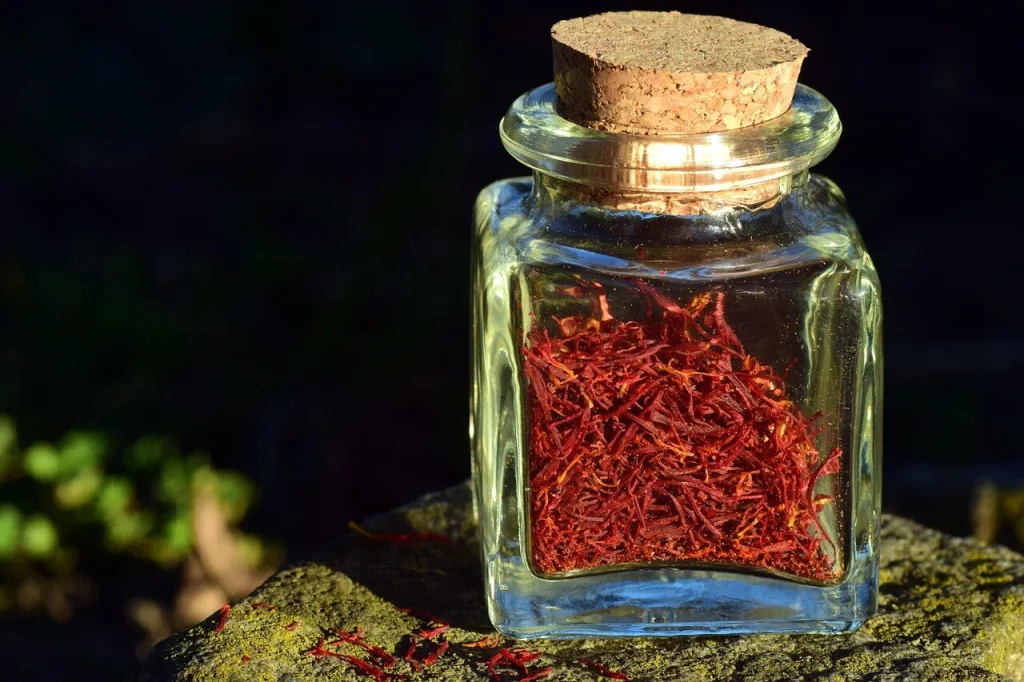

Wellness stacks are everywhere — but few pairings make as much intuitive sense as saffron and shilajit. One is the world’s most celebrated mood spice, the other a mineral-dense vitality resin. Their benefits barely overlap: saffron calms and balances, shilajit energizes and rebuilds. That complementary split is exactly what a good stack looks like. Here is how to do it sensibly.
Why the Pairing Works on Paper
Saffron’s studied strengths are mood, stress-response, and sleep quality — a 2026 meta-analysis of 34 RCTs confirmed significant benefits (PMID 41693488). Shilajit’s are testosterone, stamina, and mineral replenishment, shown in randomized trials on men and postmenopausal women (PMID 26395129). Different targets, different timing windows — no documented interaction between them.
The Simple Stack Schedule
- Morning: pea-sized shilajit resin (250 mg) in warm water — energy and mineral support for the day.
- Evening (60–90 min before bed): saffron tea or latte from 15–20 threads — wind-down and sleep quality.
- Consistency: both compounds reward 4–6 weeks of daily use; neither is a same-day effect.
Dosing Details
Saffron: stay at the studied ~30 mg/day (full dosage guide). Shilajit: 250 mg/day is the most-tested dose; 500 mg appears in some trials. More is not better with either — saffron above ~1.5 g/day is unnecessary and higher doses raise caution flags, and excess shilajit just stresses the gut.
Who Should Skip the Stack
- Anyone on SSRIs, blood pressure, or blood-thinning medication — saffron interactions apply (see safety guide); get medical sign-off.
- Pregnancy — high-dose saffron is traditionally avoided; shilajit lacks pregnancy data entirely.
- Anyone with kidney conditions — shilajit’s mineral load warrants caution; speak to your doctor.
Quality Rules for Both
A stack is only as clean as its ingredients. For saffron: whole threads, deep red, verified grade (how to spot real saffron). For shilajit: purified resin with published third-party heavy-metal testing — this is the single most important filter, because unverified resin is the category’s known failure point.
What to Expect, Realistically
Weeks 1–2: subtle, easy to miss. Weeks 3–4: steadier afternoons (shilajit) and easier wind-downs (saffron). Weeks 4–6: this is where trials measured their endpoints — mood scores, sleep quality, and vitality markers. Keep a simple daily 1–10 note on mood, energy, and sleep to judge it honestly.
The Bottom Line
Stacking saffron and shilajit is reasonable, low-interaction, and covers complementary bases: calm plus drive, night plus morning. The discipline is in dosing modestly, sourcing cleanly, and giving it six honest weeks.
Want saffron on your side? Explore our saffron tea recipes or try our caffeine-free saffron latte mix — a simple daily ritual.
Can you take saffron and shilajit together?
Yes — no interaction is documented, and their benefits target different systems. The common approach is shilajit in the morning and saffron tea or a latte in the evening.
How long before the stack works?
Most saffron and shilajit trials measured results at 4–8 weeks of consistent daily use. Subtle effects often appear by week 2–3.
What doses should I use?
About 30 mg saffron daily (15–20 threads brewed) and 250 mg purified shilajit daily — the most-studied amounts for both.
Is this stack safe with medications?
Check with your doctor first, especially with SSRIs, blood pressure, or blood-thinning drugs — saffron has documented interactions.