
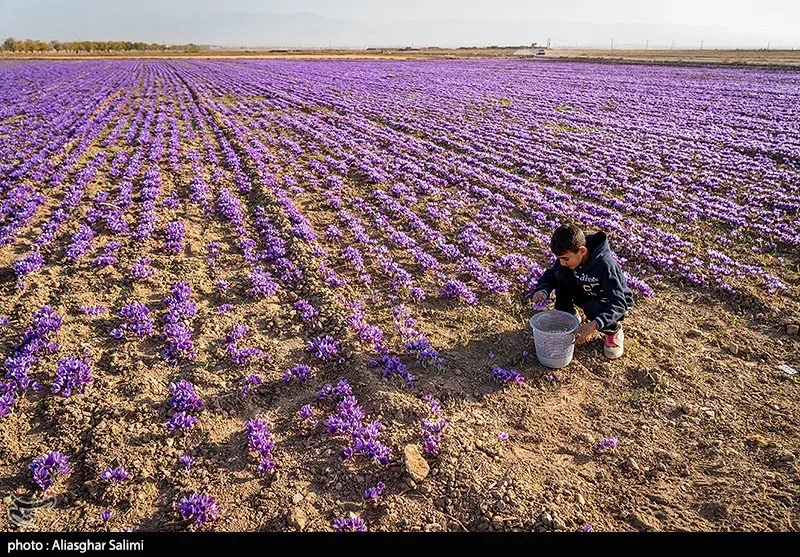
Where Is Saffron Grown? The World’s Top Saffron Producing Countries
Saffron — the world’s most precious spice — grows in a handful of regions where soil, altitude, and climate meet in perfect harmony. Known as “red gold,” saffron requires cold winters, dry summers, and well-drained soil — conditions that only a few countries can offer.
Let’s explore where saffron is grown, the main saffron producing countries, and what makes each region’s threads unique.
🗺️ Global Saffron Map

Global Saffron Cultivation Map — highlighting Iran, India, Spain, Greece, and Afghanistan as top saffron producing countries.
This map visually represents the world’s most famous saffron regions — stretching from the Iranian highlands to the Mediterranean coast and the Himalayan valleys.
🇮🇷 1. Iran — The Heart of Saffron Production
Iran is the undisputed leader among all saffron producing countries, responsible for over 85–90% of the world’s saffron, according to Food and Agriculture Organization data.
Most Iranian saffron comes from Khorasan Province, where centuries of cultivation have refined the process of harvesting and drying.
Why it stands out:
- Deep red Super Negin and Sargol varieties
- Rich aroma and strong coloring power (high crocin level)
- Ideal for both culinary and medicinal use
Iranian saffron sets the global standard for quality and purity. READ MORE about Iranian Saffron
Iranian Saffron Production in Detail
Iran’s saffron industry is concentrated in the Khorasan-Razavi and South Khorasan provinces in the northeast of the country. The region’s semi-arid climate, with its cold winters and hot, dry summers, creates ideal conditions for Crocus sativus. The city of Torbat-e Heydarieh is considered the saffron capital of Iran, producing over half of the country’s total output.
Iran produces approximately 300–400 tons of saffron annually, with the harvest taking place from late October through November. The industry supports an estimated 100,000+ farming families who rely on saffron as a primary source of income. Despite facing challenges from international sanctions and water scarcity, Iranian saffron remains the benchmark for global quality, with its Super Negin and Sargol grades commanding premium prices worldwide.
🇮🇳 2. India — Kashmiri Saffron of Pampore
India is home to the famous Kashmiri saffron, grown mainly in the Pampore region of Jammu & Kashmir.
Although the overall production is much smaller than Iran’s, Kashmiri saffron is celebrated for its distinct aroma, darker color, and thicker threads.
Highlights:
- Geographical Indication (GI) tag protects its authenticity
- Harvest season: late October to early November
- Considered one of the most aromatic saffron varieties in the world
India remains a cultural symbol of saffron heritage — blending spirituality, cuisine, and tradition.
Kashmir: The Heritage Origin
Kashmiri saffron is grown in the Karewa — high-altitude plateaus formed by ancient lakebeds that provide unique mineral-rich soil. The most prized Kashmiri saffron comes from Pampore, a small town 14 kilometers from Srinagar. Unlike Iranian saffron, which is grown on flat plains, Kashmiri saffron is cultivated at elevations of 1,500–1,600 meters above sea level, which contributes to its exceptional aroma and dark purple-red color.
Kashmir produces only about 10–15 tons annually — less than 2% of global production — but its saffron is considered among the finest in the world. The threads are noticeably longer and thicker than Iranian varieties, with a deeper, almost maroon color. Unfortunately, Kashmiri saffron production has been declining due to climate change, urbanization of farmland, and competition from cheaper Iranian imports. Efforts are underway to protect this heritage crop through the GI tag and government support programs.
🇪🇸 3. Spain — La Mancha and Andalusia
Spain is Europe’s most famous saffron producer, especially in La Mancha, Andalusia, and Aragón regions. Spanish saffron is prized for its balanced flavor and bright red-orange hue.
Characteristics:
- Milder aroma, slightly smoky undertone
- Used in traditional dishes like paella and fabada
- Protected Designation of Origin (PDO): Azafrán de La Mancha
Spain is also a major saffron exporter, often trading premium threads to gourmet markets across the EU and U.S.
Spain: The European Market Leader
Spanish saffron production is centered in the Castilla-La Mancha autonomous community, where the flat, sun-baked plains provide excellent growing conditions. The saffron from this region carries a Protected Designation of Origin (PDO) status under the name “Azafrán de La Mancha,” which guarantees that the saffron was grown, harvested, and processed entirely within the designated area using traditional methods.
Spain produces roughly 1–3 tons of saffron per year — a fraction of Iran’s output — but it plays an outsized role in the European market. Spanish saffron is known for its balanced flavor profile, with a slightly smoky, earthy undertone that sets it apart from Iranian varieties. It is the saffron of choice for traditional Spanish dishes like paella, fabada asturiana, and various tapas preparations. Spain also serves as a major re-export hub, importing Iranian saffron and repackaging it for European consumers.
🇬🇷 4. Greece — Kozani Saffron
In northern Greece, the Kozani region produces small but exceptional quantities of saffron known as Krokos Kozanis.
Greek saffron has a distinct floral profile, cultivated using sustainable and traditional hand-picking methods.
Highlights:
- PDO-certified “Krokos Kozanis” saffron
- Vibrant aroma with earthy, honey-like notes
- Used widely in teas, herbal infusions, and Greek desserts
Greece’s saffron industry focuses on quality over quantity, making it one of the most trusted European saffron origins.
🇦🇫 5. Afghanistan — Emerging Saffron Powerhouse
Afghanistan is rapidly becoming one of the world’s fastest-growing saffron producing countries.
In provinces like Herat and Balkh, farmers are replacing poppy crops with saffron due to its higher profitability and global demand.
Why it matters:
- Naturally organic growing conditions
- Strong color intensity, similar to Iranian saffron
- Supported by international NGOs for sustainable agriculture
Afghan saffron has won multiple international awards for quality and purity — a promising sign for the country’s future as a saffron leader.
Afghanistan: The Emerging Producer
Afghan saffron cultivation is concentrated in Herat Province in western Afghanistan, where the climate and soil closely mirror those of neighboring Iran’s Khorasan region. Since the early 2000s, international development organizations have promoted saffron as a profitable alternative to opium poppy cultivation, providing training, infrastructure, and market access to Afghan farmers.
Afghanistan now produces approximately 5–8 tons of saffron annually, and its quality has been recognized with multiple awards at international food expositions. Afghan saffron is particularly noted for its naturally organic growing conditions — many farmers cannot afford chemical inputs, so the saffron is effectively organic by default. The color intensity and aroma profile are comparable to Iranian Sargol, making Afghan saffron an increasingly popular choice in European and North American markets.
🌍 Greece and Morocco: Traditional Growers
Beyond the top five producers, several other countries maintain significant saffron traditions:
Morocco (Taliouine)
Moroccan saffron is grown in the Taliouine-Taznakht region in the Atlas Mountains, at elevations of 1,200–1,500 meters. Morocco produces approximately 3–5 tons annually. Moroccan saffron is known for its balanced, slightly sweet flavor and is widely used in tagines, couscous, and traditional Moroccan mint tea. The cooperative movement in Morocco has empowered women farmers and helped standardize quality, making Moroccan saffron increasingly visible in international markets.
Greece (Kozani)
Greek saffron, known as Krokos Kozanis, is cultivated in the Kozani regional unit of Western Macedonia. The Krokos Kozanis Cooperative, founded in 1971, unites approximately 1,000 farmer-members who produce saffron under strict PDO guidelines. Greek saffron has a distinctive floral, honey-like aroma with earthy undertones. Annual production is approximately 4–6 tons, with the majority exported to European markets. The cooperative model ensures consistent quality and fair pricing for farmers.
🌱 Production Challenges: Climate, Labor, and Water
Saffron production faces several significant challenges that threaten future supply:
- Climate change: Shifting weather patterns, unpredictable rainfall, and rising temperatures disrupt the delicate timing of saffron flowering. Unseasonal rains during harvest can destroy an entire crop.
- Water scarcity: Saffron requires less water than most crops, but prolonged droughts in Iran and Afghanistan are reducing yields and forcing farmers to abandon traditional growing areas.
- Labor availability: Saffron harvesting is entirely manual — each flower must be picked by hand at dawn and the stigmas separated by skilled workers. As rural populations migrate to cities, seasonal labor pools are shrinking across the main growing regions. For a full breakdown of the hand-picking economics and market price drivers, see our dedicated guide on why saffron is so expensive.
- Adulteration and fraud: The high value of saffron incentivizes adulteration with cheaper materials, undermining trust in the market and hurting legitimate producers.
- Land competition: Urban expansion in Kashmir and parts of Iran is reducing the available farmland for saffron cultivation.
🌎 How Geography Affects Saffron Quality
The terroir — the combination of soil, climate, altitude, and traditional farming practices — profoundly influences saffron’s chemical composition and sensory qualities:
- Altitude: Higher elevations (like Kashmir at 1,500m+) tend to produce saffron with deeper color and stronger aroma due to greater UV exposure and temperature variations.
- Soil composition: Well-drained, calcareous soils with good organic matter produce the healthiest corms and highest-quality threads. The mineral content of the soil affects the trace elements in the saffron.
- Temperature range: Saffron needs cold winters (to trigger dormancy) and hot, dry summers. Regions with a wide temperature differential between day and night during flowering produce more potent saffron.
- Drying tradition: Each region has its own drying method, which affects the final flavor profile. Iranian saffron is traditionally sun-dried or gently toasted, while Spanish saffron may be dried over indirect heat, contributing to its smoky notes.
🔮 The Future of Saffron Production
The global saffron market is projected to grow at approximately 6–8% annually, driven by increasing demand in the food, pharmaceutical, and cosmetic industries. Several trends are shaping the future:
- New growing regions: Countries like the United States (Vermont, Pennsylvania), China, and Australia are experimenting with saffron cultivation, potentially diversifying global supply.
- Sustainable farming initiatives: Fair trade certifications and cooperative models are improving farmer livelihoods and ensuring ethical sourcing.
- Technology adoption: Greenhouse cultivation, drip irrigation, and mechanized harvesting aids are being tested to reduce labor costs and improve consistency.
- Organic certification growth: Consumer demand for organic saffron is rising, particularly in North America and Europe, creating premium market opportunities for certified producers.
🌾 Other Notable Saffron Producing Regions
While these five countries lead the world in saffron cultivation, smaller quantities are also grown in:
- Italy (Abruzzo and Sardinia)
- Morocco (Taliouine)
- China (Tibet and Henan)
- Turkey (Safranbolu)
- USA (Vermont, Pennsylvania, California – emerging farms)
These new regions reflect a growing global interest in sustainable saffron farming.
🌸 Summary: The Global Saffron Landscape
| Country | Main Region | Specialty | Key Features |
|---|---|---|---|
| Iran | Khorasan | Super Negin, Sargol | Deep color, strong aroma |
| India | Kashmir (Pampore) | Kashmiri Saffron | Dark threads, rich aroma |
| Spain | La Mancha | Azafrán de La Mancha | Mild, bright color |
| Greece | Kozani | Krokos Kozanis | Floral, PDO-certified |
| Afghanistan | Herat | Afghan Super Negin | Organic, emerging leader |
Which country produces the best saffron?
Iran produces the vast majority of the world’s saffron and sets the global quality standard, particularly with its Super Negin and Sargol grades. However, Kashmiri saffron from India is considered by many experts to have the most intense aroma, while Spanish saffron from La Mancha is prized for its balanced flavor in Mediterranean cooking. “Best” depends on your culinary needs and personal preference.
Why is Iranian saffron considered the gold standard?
Iran’s Khorasan region offers ideal growing conditions — semi-arid climate, cold winters, hot summers, and mineral-rich soil. Combined with centuries of farming expertise and advanced grading systems, Iranian saffron consistently achieves the highest ISO 3632 ratings for crocin, safranal, and picrocrocin content.
Is Afghan saffron as good as Iranian saffron?
Afghan saffron is comparable in quality to Iranian saffron, with similar color intensity and aroma profiles. Because many Afghan farmers use no chemical inputs, Afghan saffron is often effectively organic. It has won international quality awards and is gaining recognition as a premium origin.
How much saffron does the world produce each year?
Global saffron production is estimated at approximately 350–450 tons annually. Iran accounts for 85–90% of this total, with the remaining 10–15% split among India, Spain, Greece, Afghanistan, Morocco, and smaller producers.
✨ Conclusion
When asking “where is saffron grown?”, remember — each region contributes its own character, shaped by soil, sun, and centuries of craftsmanship.
From Iran’s vast plains to Kashmir’s valleys and Spain’s golden fields, every thread tells a story of tradition, passion, and purity.
At SaffronWell, we celebrate this global heritage by offering premium saffron sourced ethically from top-producing countries, ensuring every strand you buy carries authenticity and excellence.
👉 Explore our full collection of premium saffron and learn more about How to Identify Pure Saffron